
Brand, UA and media teams · 8 min read
Mobile gaming influencer marketing: where the audience actually is
Six mobile titles drew 1.87 billion hours of live viewing in six months — 68% of it on TikTok and 2% on Twitch. Which title reaches which country, and in which language.
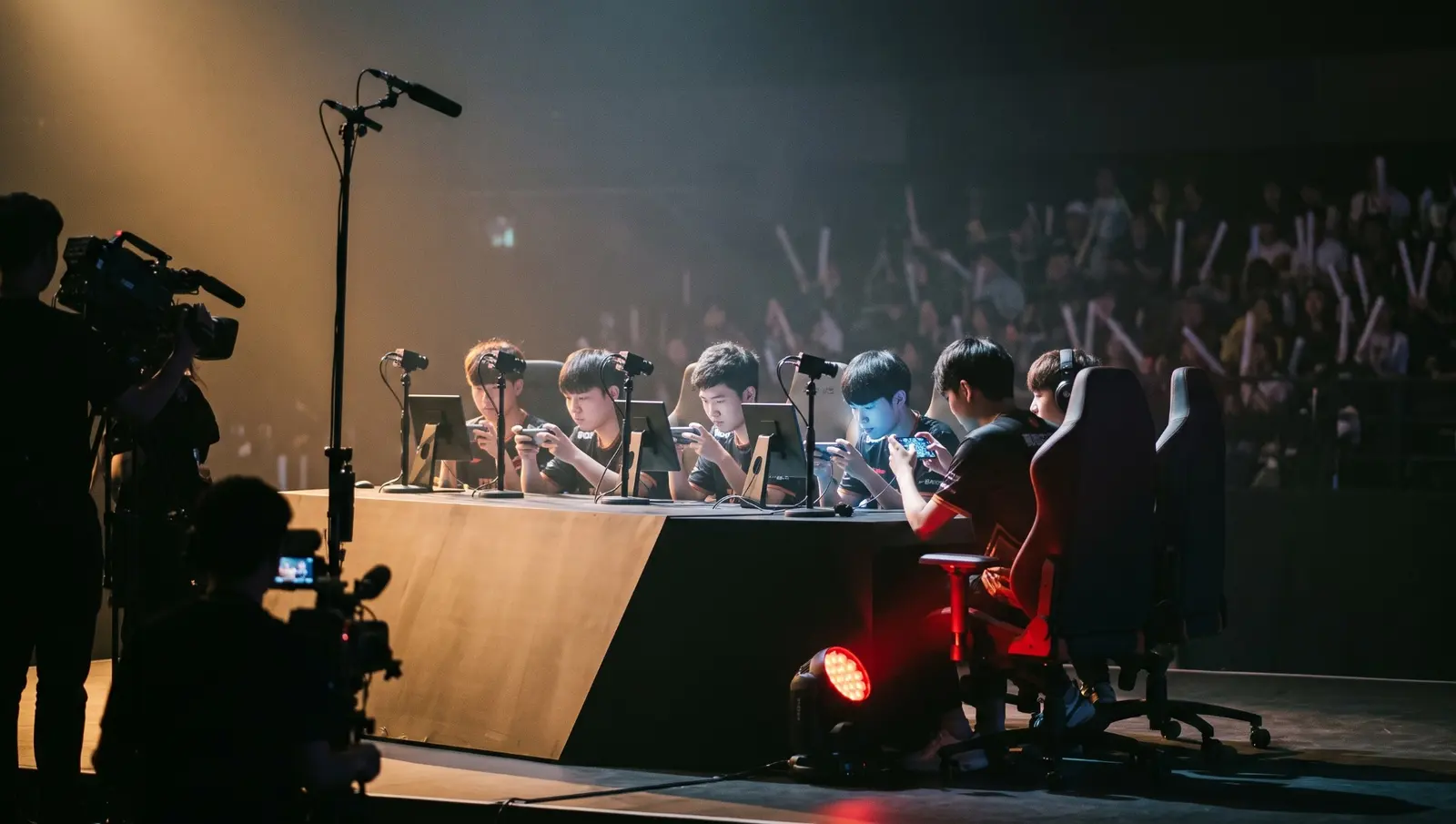
Mobile games are the largest part of the games industry and the smallest part of most media plans. The reason is usually not scepticism about the audience — it is that the audience sits on platforms and in countries the plan was not built for. Here is what the live streaming side of mobile gaming actually looks like, measured rather than asserted.
The scale
Six titles — Free Fire, Mobile Legends: Bang Bang, PUBG Mobile, Brawl Stars, Clash Royale and Clash of Clans — drew 1.87 billion hours of live viewing in six months, from 1 March to 31 August 2026. Across the platforms that expose channel-level data, 103,034 distinct channels streamed them.
1.87B
Hours watched
6 titles, 6 months
103k
Channels
excl. TikTok
68%
On TikTok
2%
On Twitch
| Title | Hours watched | Channels | Largest markets |
|---|---|---|---|
| Free Fire | 647M | 30,668 | Brazil, India, Vietnam |
| Mobile Legends: Bang Bang | 603M | 28,716 | Indonesia, Philippines, Malaysia |
| PUBG Mobile | 495M | 21,149 | Saudi Arabia, Egypt, Indonesia |
| Brawl Stars | 60M | 17,941 | Spain, Ukraine, Brazil |
| Clash Royale | 58M | 6,680 | Mexico, Germany, USA |
| Clash of Clans | 10M | 3,178 | Indonesia, Turkey, Brazil |
Streams Charts warehouse, 1 Mar – 31 Aug 2026. China-only platforms excluded. Channel counts cover YouTube, Twitch, Kick, Facebook, Bigo and NimoTV; TikTok does not expose channel-level data, so the real creator pool is larger than the column shows.
Those are not niche numbers. Measured over the same six months, on the same platforms, Free Fire and Mobile Legends each drew more live viewing than Counter-Strike, Valorant, Fortnite or Dota 2, and PUBG Mobile did too.
| Title | Hours watched |
|---|---|
| League of Legends | 874M |
| Grand Theft Auto V | 663M |
| Free Fire | 647M |
| Mobile Legends: Bang Bang | 603M |
| PUBG Mobile | 495M |
| Valorant | 467M |
| Minecraft | 460M |
| Counter-Strike | 454M |
| Fortnite | 419M |
| Dota 2 | 349M |
Same window and same exclusions as above. Mobile titles in bold.
Where it is watched
This is the finding that upends most mobile gaming plans. Across the six titles, TikTok carried roughly 68% of live viewing and Twitch 2%.
- TikTok
- 67.8%
- YouTube
- 22.5%
- Kick
- 5.9%
- Twitch
- 2.2%
- Facebook, Bigo, NimoTV
- 1.6%
Per title the gap is starker still. Free Fire drew 490 million hours on TikTok against 1.1 million on Twitch — a factor of 445. Mobile Legends drew 390 million on TikTok and 12 million on Twitch. A brand that equates live streaming with Twitch is not buying a smaller slice of mobile gaming; it is very nearly not buying it at all.
Two details are worth pulling out. PUBG Mobile draws 83 million hours on Kick, more than it draws on YouTube — the only title of the six where that is true, and a reflection of how Kick has grown in Turkey and the Gulf. And the three Supercell titles are the exception to the whole pattern: Brawl Stars takes 11.5 million hours on Twitch, which puts it in the same order of magnitude as its YouTube figure.
Each title is a different market
“Mobile gaming” is not a targetable audience. The six titles barely overlap geographically, and picking the wrong one is not a matter of efficiency — it means reaching a different continent.
Mobile Legends: Bang Bang — Southeast Asia
Audience concentrationThe most regionally concentrated title of the six, and the one where a local-language brief is not optional.
- Where it is watched
- Indonesia alone accounts for 101M hours from 4,685 channels — more than every other country for this title combined. Then the Philippines (16M, 2,684 channels), Malaysia (13M), Thailand (9M), Singapore (8M) and Cambodia (4M).
- What that means for a brief
- Only 12.4% of viewing is in English. A single English creative reaches roughly one hour in eight. Indonesian and Tagalog carry the audience, and the creator pool is deep enough to run tiered campaigns rather than chase the same five names.
PUBG Mobile — Middle East, South Asia and Turkey
Audience concentrationA completely different map from Mobile Legends, which is why “mobile gaming” is not a targetable region.
- Where it is watched
- Saudi Arabia leads at 19M hours, then Egypt (16M), Indonesia (12M), India (12M), Turkey (11M), the UAE (9M), Iraq (8M) and Jordan (8M). Arabic-speaking markets are the core, with Turkey supplying the widest creator pool at 1,813 channels.
- What that means for a brief
- This is the title to buy if the product sells in the Gulf. Arabic creative, Ramadan and Eid timing, and local payment or store availability matter more than creator tier. Note also that Kick carries 83M hours here — more than YouTube.
Free Fire — Latin America, South Asia, North Africa
Audience concentrationThe largest of the six by hours and by creator count, and the most geographically spread.
- Where it is watched
- Brazil (38M) and India (35M) lead, followed by Vietnam, Indonesia, Mexico, Morocco, Bangladesh and Argentina. Vietnam and Thailand each field over 1,100 channels despite modest hours — a long tail of small creators rather than a few large ones.
- What that means for a brief
- Free Fire runs on low-end handsets in markets where that is the only handset, which is exactly why it is useful to advertisers whose product is priced for those markets. Portuguese and Hindi do the heavy lifting; English is 33% of viewing, the highest of the six.
Brawl Stars, Clash Royale, Clash of Clans — Europe and LATAM
Audience concentrationAn order of magnitude smaller, but the closest to the platform mix a Western media team already knows.
- Where they are watched
- Brawl Stars skews European: Spain (4.4M), Ukraine (2.7M), Finland, Italy, Germany and France, with Brazil the largest non-European market. Clash Royale leads in Mexico (3.7M), Germany (3.4M) and the USA (2.4M). Clash of Clans is the smallest at 10M hours total.
- What that means for a brief
- These three are the only ones of the six where Twitch is a real surface rather than a rounding error — Brawl Stars draws 11.5M hours there. Budgets are smaller and audiences skew younger, which puts age-gating and platform ad policy at the front of the brief.
The language problem
English carries a minority of viewing in every one of these titles. For Mobile Legends and Brawl Stars it is around one hour in eight.
- Clash of Clans
- 25.4%
- Clash Royale
- 21.4%
- PUBG Mobile
- 16.7%
- Mobile Legends
- 12.4%
- Brawl Stars
- 12.2%
This is a creative cost, not a translation cost. A sponsored stream is live, unscripted and conversational: the creator has to be able to talk about the product in the language the chat is speaking, handle questions in it, and read a call to action that sounds like them. Subtitling an English brief does not produce that. It is also why the deep creator pools matter — Indonesia fields 4,685 Mobile Legends channels, so there is no need to over-pay the same three names.
What this changes in a brief
Nothing in the mechanics changes: the placement types and the campaign formats work the same way on a phone game as on a PC one, and the cost drivers are the same. What changes is the order in which the questions get asked.
- Market first, title second. Decide where the product has to sell, then pick the title that reaches it. Choosing the game first is how campaigns end up in the wrong hemisphere.
- Budget the platform you found, not the one you know. If the plan says Twitch and the audience is on TikTok, the media plan is wrong, however comfortable it looks.
- Brief in the language of the chat. Local creative is the campaign, not a localisation line item at the end of it.
- Check platform ad policy per market. These audiences skew young, and the rules on age-gating, gambling adjacency and disclosure differ by platform and country — brand safety is a per-market question here.
- Measure on the platform that carried it. Reporting that only covers Twitch and YouTube will miss two thirds of a mobile campaign. See how a campaign is measured.
Questions this raises
- Is mobile gaming big enough to advertise in?
- Six mobile titles alone drew 1.87 billion hours of live viewing in six months across roughly 103,000 channels. In the same window Free Fire, Mobile Legends and PUBG Mobile each out-drew Counter-Strike, Valorant, Fortnite and Dota 2.
- Which platform should a mobile gaming campaign run on?
- TikTok, in most cases. It carried 68% of live viewing across these six titles, against 22% for YouTube, 6% for Kick and 2% for Twitch. The exception is the Supercell titles — Brawl Stars and Clash Royale — where Twitch and YouTube are genuine surfaces.
- Why is Twitch so small in mobile gaming?
- Twitch's audience is concentrated in North America and Europe on desktop, while mobile gaming's audience is in Southeast Asia, South Asia, Latin America and the Middle East, on phones. Free Fire drew 490 million hours on TikTok in six months and 1.1 million on Twitch.
- Which mobile game should a brand sponsor?
- It depends entirely on the market. Mobile Legends reaches Indonesia and the Philippines, PUBG Mobile reaches Saudi Arabia, Egypt and the Gulf, Free Fire reaches Brazil and India, and Brawl Stars reaches Spain, Ukraine and Germany. There is no single mobile gaming audience.
- Can a mobile gaming campaign run in English?
- Only partly. English accounts for 12% of Mobile Legends viewing and 12% of Brawl Stars, rising to 33% for Free Fire. A campaign briefed only in English reaches a minority of the audience in most of these titles, which is a creative cost, not just a translation one.